
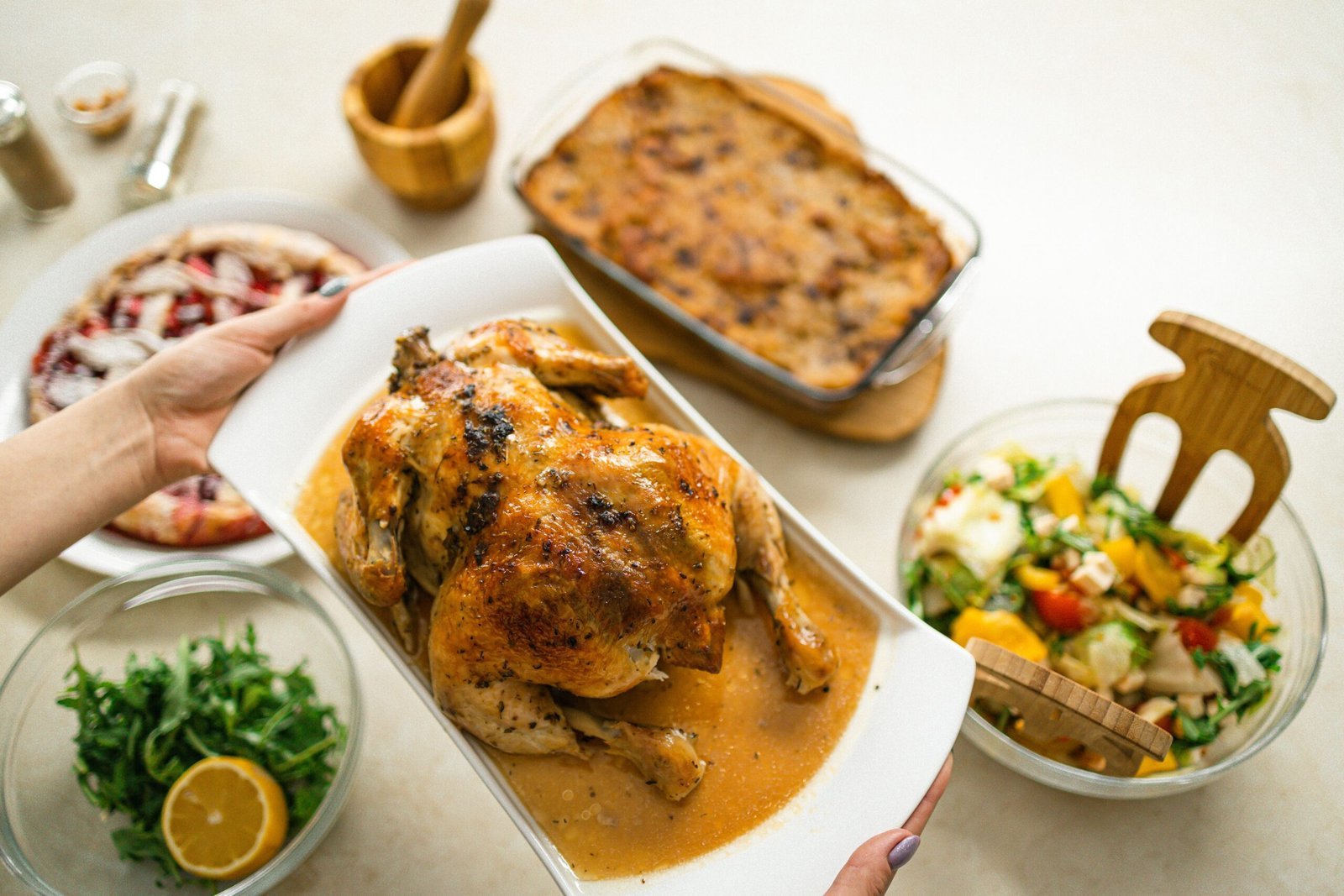
There’s nothing quite like the sight of a perfectly roasted whole chicken – golden, crisp skin glistening, fragrant herbs wafting through the kitchen, and tender, juicy meat waiting to be carved. It’s the ultimate centerpiece for Sunday dinners, holiday feasts, or any meal that calls for something truly special. And the best part? It’s incredibly simple to make.
I still remember the first time I roasted a whole chicken. I was intimidated, convinced it would be dry or undercooked, or that I’d somehow ruin it. But with a little lemon, some fresh herbs, and a hot oven, I discovered that roasting a chicken is one of the most forgiving and rewarding cooking techniques there is. The chicken bastes itself as it roasts, the skin crisps up beautifully, and the meat stays incredibly moist and flavorful.
This recipe is my tried‑and‑true method for a perfect lemon herb roast chicken. The combination of bright, zesty lemon, aromatic garlic, and fragrant fresh herbs creates a flavor that’s both classic and unforgettable. The pan juices become a delicious base for gravy, and the leftovers (if there are any!) are perfect for sandwiches, salads, and soups. Once you master this recipe, it will become a staple in your kitchen – I promise.
What Is Lemon Herb Roast Chicken?
Lemon herb roast chicken is a classic dish where a whole chicken is seasoned inside and out with a mixture of fresh herbs, garlic, and lemon, then roasted in the oven until the skin is golden and crispy and the meat is tender and juicy. The lemon and herbs infuse the chicken with bright, aromatic flavors, while the roasting process creates a beautiful, caramelized exterior. It’s a timeless, elegant dish that’s surprisingly simple to prepare.
Why It’s a Classic
Roast chicken is beloved worldwide for its simplicity, elegance, and incredible flavor. It’s a dish that feels special enough for holidays and celebrations, yet simple enough for a comforting Sunday dinner. The leftovers are equally versatile – perfect for sandwiches, salads, soups, and more. It’s also budget‑friendly and feeds a crowd.
Flavor & Texture Profile
- Flavor: Bright, zesty lemon, aromatic garlic, and fragrant herbs (rosemary, thyme, parsley) infuse the meat with classic, clean flavors.
- Texture: Crispy, golden skin that shatters with each bite, revealing tender, juicy meat that’s perfectly seasoned from the inside out.
- Aroma: The irresistible scent of roasting chicken, lemon, garlic, and fresh herbs filling your kitchen – pure comfort.
Why People Love It
Roast chicken is the ultimate comfort food. It’s nostalgic, satisfying, and brings people together around the table. It’s also incredibly versatile – you can change up the herbs, add different vegetables, or serve it with a variety of sides. Plus, the leftovers are a gift that keeps on giving.
Why You’ll Love This Recipe
- Perfectly Juicy: The lemon and herbs infuse the meat with moisture and flavor, ensuring tender, juicy results every time.
- Crispy, Golden Skin: A simple technique ensures the skin is beautifully crisp and golden.
- Simple Ingredients: Just a whole chicken, lemon, herbs, garlic, and olive oil – nothing fancy.
- One‑Pan Meal: Roast vegetables alongside the chicken for a complete dinner.
- Impressive Yet Easy: Looks like a restaurant‑quality dish but is incredibly simple to prepare.
- Leftover Goldmine: Use leftovers for sandwiches, salads, soups, and more.
- Versatile: Change up the herbs or add different vegetables to make it your own.
Ingredients
For the Chicken
- Whole chicken – 4‑5 lbs (preferably organic or free‑range)
- Olive oil – 2 tablespoons (for rubbing the skin)
- Salt – 1 tablespoon (kosher or sea salt preferred)
- Black pepper – 1 teaspoon (freshly ground)
- Garlic – 4 cloves (minced or sliced)
- Fresh rosemary – 2 sprigs (or 1 tablespoon chopped)
- Fresh thyme – 4 sprigs (or 1 tablespoon chopped)
- Fresh parsley – ¼ cup (chopped, plus extra for garnish)
- Lemon – 1 large (halved, one half juiced, one half for stuffing)
For the Pan Roasting (Optional Vegetables)
- Carrots – 2 (cut into chunks)
- Onion – 1 (cut into wedges)
- Potatoes – 1 lb (halved or quartered)
- Additional garlic cloves – 4 (peeled and smashed)
- Olive oil – 1 tablespoon (for vegetables)
- Salt and pepper – to taste
Premium Ingredient Options
- Chicken: Organic, free‑range or pasture‑raised chicken has superior flavor and texture.
- Herbs: Fresh herbs are essential – dried won’t provide the same bright, aromatic flavor.
- Lemon: Organic, unwaxed lemons are ideal if you’re using the zest.
Budget Alternatives
- Use a standard supermarket chicken – it will still be delicious.
- Use dried herbs if fresh aren’t available (use 1 teaspoon dried for every 1 tablespoon fresh).
- Skip the vegetables in the pan and roast them separately.
Common Ingredient Mistakes
- Not patting the chicken dry: Moisture on the skin prevents it from getting crispy.
- Using a cold chicken: Let the chicken come to room temperature before roasting for even cooking.
- Overcrowding the pan: Vegetables need space to roast properly – use a large enough pan.
Ingredient Substitutions
- Dairy‑Free: This recipe is naturally dairy‑free.
- Gluten‑Free: Naturally gluten‑free.
- Paleo / Whole30: This recipe is Paleo and Whole30‑compatible.
- Keto / Low‑Carb: Skip the potatoes and add extra low‑carb vegetables like cauliflower or Brussels sprouts.
- Different Herbs: Use sage, oregano, or tarragon instead of rosemary and thyme.
Equipment
Essential Tools
- Large roasting pan or cast‑iron skillet
- Meat thermometer (instant‑read is ideal)
- Kitchen twine (for trussing, optional but recommended)
- Chef’s knife and cutting board
- Measuring spoons
- Basting brush (optional)
Optional Tools
- Roasting rack (elevates the chicken for even browning)
- Kitchen shears (for spatchcocking, if preferred)
- Immersion blender (for making gravy from pan juices)
Step‑by‑Step Instructions
- Step 1: Prep the Chicken
Remove the chicken from the refrigerator 45‑60 minutes before roasting to bring it to room temperature. Pat the chicken completely dry with paper towels – inside and out. This is essential for crispy skin.
Why this matters: Room temperature chicken cooks more evenly, and drying the skin helps it crisp up beautifully.
Visual cue: The chicken should feel dry to the touch with no visible moisture on the skin. - Step 2: Season the Chicken
In a small bowl, combine the salt, pepper, minced garlic, chopped rosemary, thyme, and parsley. Stir in the juice of half the lemon to form a paste. Rub this mixture all over the chicken – both under the skin (gently loosen the skin over the breast) and on the outside. Stuff the cavity with the remaining lemon half, the used lemon halves, and any extra herb sprigs.
Pro tip: Getting the seasoning under the skin allows the flavors to permeate the meat directly.
Visual cue: The chicken should be evenly coated with the herb mixture. - Step 3: Truss (Optional)
Truss the chicken by tying the legs together with kitchen twine and tucking the wing tips under the body. This helps the chicken cook more evenly and keeps it compact.
Beginner tip: If you don’t have twine, simply tuck the wings under and leave the legs untied – it will still cook beautifully. - Step 4: Preheat and Prep the Pan
Preheat your oven to 425°F (220°C). If you’re roasting vegetables, toss them with 1 tablespoon of olive oil, salt, and pepper, and arrange them in a single layer in a large roasting pan. Place the chicken on top of the vegetables or on a roasting rack set inside the pan.
Pro tip: Placing the chicken on a bed of vegetables elevates it slightly, allowing hot air to circulate underneath for crispy skin. - Step 5: Roast the Chicken
Place the chicken in the oven and roast for 15 minutes at 425°F, then reduce the temperature to 375°F (190°C) and continue roasting for 45‑60 more minutes, depending on the size of your chicken (about 15 minutes per pound). Baste the chicken with the pan juices every 20‑30 minutes for extra flavor and moistness.
Visual cue: The skin should be deep golden brown and crispy.
Aroma cue: The kitchen will be filled with the amazing smell of roasting chicken and herbs.
Temperature cue: The chicken is done when a meat thermometer inserted into the thickest part of the thigh reads 165°F (74°C) and the juices run clear. - Step 6: Rest the Chicken
Remove the chicken from the oven and transfer it to a cutting board. Loosely tent with aluminum foil and let it rest for 15‑20 minutes. This is crucial – it allows the juices to redistribute throughout the meat.
Why this matters: Resting keeps the meat moist and tender. If you carve too soon, the juices will run out onto the cutting board.
Visual cue: The chicken will feel firmer after resting. - Step 7: Make a Pan Sauce (Optional)
While the chicken rests, place the roasting pan over medium heat on the stovetop. Add ½ cup of chicken broth or white wine and scrape up the browned bits from the bottom. Simmer for 5‑7 minutes until slightly reduced. Strain and serve alongside the chicken.
Pro tip: This simple pan sauce captures all the delicious flavors from the roasted chicken and vegetables. - Step 8: Carve and Serve
Carve the chicken and serve with the roasted vegetables, a spoonful of pan sauce, and a sprinkle of fresh parsley. Enjoy warm.
Expert Chef Tips
Restaurant Techniques for Home Cooks
- Dry the Skin Thoroughly: This is the #1 secret to crispy skin – pat it very dry, and consider leaving the chicken uncovered in the fridge overnight to dry the skin even more.
- Use High Heat to Start: Starting at 425°F kickstarts the browning process, then reducing to 375°F ensures the interior cooks without burning the skin.
- Baste, Baste, Baste: Basting with pan juices every 20‑30 minutes keeps the meat moist and adds flavor to the skin.
- Don’t Skip the Rest: Resting is non‑negotiable for a juicy roast chicken. It allows the juices to redistribute evenly.
- Save the Bones: After carving, save the carcass to make homemade chicken stock – it’s pure gold.
Flavor Balancing
- Salt: Season generously – the salt penetrates the meat and enhances all the flavors.
- Acid: Lemon brightens the dish and balances the richness of the chicken.
- Herbs: Rosemary and thyme provide aromatic, woodsy notes that complement the lemon beautifully.
- Garlic: Adds savory depth and warmth.
Texture Improvement Tips
- Pat the Chicken Dry: Moisture on the skin creates steam, not crispiness.
- Elevate the Chicken: Using a roasting rack or placing it on vegetables allows air to circulate around the whole bird.
- Don’t Overcrowd the Pan: Vegetables need space to roast properly – use a large enough pan.
Cooking Science
The high heat at the beginning of roasting creates the Maillard reaction on the chicken skin, producing complex, savory flavors and that beautiful golden color. As the chicken roasts, the fat renders from the skin, basting the bird and keeping the meat moist. The lemon and herbs infuse the meat with flavor through steam and direct contact. Resting allows the muscle fibers to relax and reabsorb the juices that were pushed to the center during cooking – this is what keeps the meat tender and juicy.
Troubleshooting
- Skin isn’t crispy – Make sure the chicken is very dry before roasting; use high heat at the start; don’t cover the chicken while roasting; consider dry‑brining overnight in the fridge.
- Chicken is dry inside – You likely overcooked it. Use a meat thermometer and remove at 165°F. Also, don’t skip the rest time.
- Chicken is undercooked – Return to the oven and continue roasting, checking the temperature every 5‑10 minutes.
- Vegetables are burnt – They may have been cut too small or placed too close to the heat. Use larger chunks and toss them halfway through roasting.
- Pan juices are burnt – There may not have been enough liquid. Add a splash of broth or water to the pan during roasting.
- Flavor is bland – Use more salt and herbs; season the chicken generously inside and out.
- Chicken isn’t browned evenly – Rotate the pan halfway through roasting for even heat distribution.
Recipe Variations
Classic Lemon Herb
Follow the recipe as written – it’s the perfect balance of bright lemon and aromatic herbs.
Garlic & Rosemary Roast Chicken
Increase the garlic to 6 cloves and use only rosemary as the herb – a simple, savory classic.
Mediterranean Roast Chicken
Add 1 teaspoon of dried oregano and ½ teaspoon of smoked paprika to the rub. Serve with roasted olives and tomatoes.
Spicy Roast Chicken
Add 1 teaspoon of chili flakes or cayenne pepper to the rub for a warm kick.
Bacon & Herb Roast Chicken
Lay strips of bacon over the breast of the chicken – the bacon fat bastes the chicken as it roasts, adding incredible flavor and keeping the breast moist.
Beer Can Chicken Style
Instead of trussing, place the chicken over an open can of beer (or lemonade) and roast upright – the steam keeps the chicken incredibly moist.
Spatchcocked Roast Chicken
Remove the backbone, flatten the chicken, and roast at 425°F for 45‑50 minutes – this cooks faster and ensures perfectly crisp skin all over.
Serving Suggestions
Classic Sides
Mashed potatoes, roasted vegetables (carrots, potatoes, Brussels sprouts), green beans, or a fresh garden salad. Also delicious with stuffing, gravy, and cranberry sauce.
Drinks
A crisp white wine like Chardonnay or Sauvignon Blanc pairs beautifully. For a red option, a light Pinot Noir works well. For non‑alcoholic, try a sparkling water with lemon.
Garnishes
Fresh parsley, lemon wedges, a sprinkle of flaky sea salt, or fresh thyme leaves.
Presentation Ideas
Serve the whole chicken on a large platter, surrounded by the roasted vegetables and fresh herbs. Carve at the table for a stunning, rustic presentation.
Storage & Reheating
Refrigeration
Store carved chicken in an airtight container in the refrigerator for up to 3‑4 days.
Freezing
Shred or slice the cooked chicken and freeze in a freezer‑safe bag or container for up to 2‑3 months.
Reheating Methods
- Oven (Best): Place in a baking dish with a splash of broth, cover with foil, and reheat at 325°F for 15‑20 minutes.
- Skillet: Sauté sliced or shredded chicken over medium heat until warmed through.
- Microwave: Heat in 60‑second intervals, covered, until hot.
Leftover Ideas
Shred the meat for sandwiches, salads, tacos, enchiladas, soups, or chicken pot pie. The bones are perfect for making homemade stock.
FAQ
How long do you roast a whole chicken?
Roast a whole chicken for about 15 minutes per pound at 375°F after an initial 15 minutes at 425°F. A 4‑5 lb chicken typically takes 60‑75 minutes total. Always use a meat thermometer to confirm it’s done – the thigh should reach 165°F.
What temperature should roast chicken be?
The safe internal temperature is 165°F (74°C) when measured in the thickest part of the thigh, without touching the bone.
How do you keep roast chicken moist?
To keep chicken moist, brine it or salt it in advance, roast at a high temperature initially, baste with pan juices, and let it rest for 15‑20 minutes before carving. Also, avoid overcooking.
Should I cover the chicken while roasting?
No – leaving it uncovered allows the skin to crisp and brown beautifully. If the skin starts to get too dark before the chicken is cooked, loosely tent with foil.
Can I use dried herbs instead of fresh?
Yes – use about 1 teaspoon of dried herbs for every 1 tablespoon of fresh herbs called for in the recipe.
What vegetables are good to roast with chicken?
Carrots, potatoes, onions, parsnips, Brussels sprouts, and butternut squash are all excellent choices. Cut them into even chunks and toss with olive oil, salt, and pepper before roasting.
How do I make gravy from pan drippings?
Place the roasting pan over medium heat, add ½ cup of broth or wine, and scrape up the browned bits. Whisk in a slurry of 1 tablespoon flour or cornstarch mixed with 2 tablespoons cold water. Simmer until thickened. Season with salt and pepper.
Can I roast a chicken without trussing it?
Yes – it’s not essential. Tucking the wings under the body and leaving the legs untied is fine. Trussing simply helps the chicken cook more evenly.
How do I store leftover roast chicken?
Store in an airtight container in the refrigerator for up to 3‑4 days. The meat can also be frozen for up to 2‑3 months.
What can I do with leftover roast chicken?
Use it for sandwiches, salads, soups, tacos, enchiladas, chicken pot pie, or chicken noodle soup. The bones are great for making homemade stock.
Can I use a frozen chicken?
Yes, but it must be fully thawed before roasting. Thaw in the refrigerator for 24‑48 hours (depending on size) before cooking.
Should I rinse the chicken before cooking?
No – rinsing poultry can spread bacteria around your kitchen. Pat it dry with paper towels instead and cook to the proper internal temperature.
How do I get crispy skin on roast chicken?
Pat the chicken completely dry, use a high temperature to start (425°F), and don’t cover it while roasting. Dry‑brining overnight in the fridge also helps achieve extra‑crispy skin.
What if my chicken is browning too quickly?
Loosely tent the chicken with aluminum foil to prevent the skin from burning while the interior finishes cooking.
Can I add lemon inside the cavity?
Yes – stuffing the cavity with lemon halves adds moisture and bright, citrusy flavor to the meat.
Nutrition (estimated per serving – about 4‑5 oz of meat without skin)
- Calories: 240‑300
- Protein: 28‑35g
- Carbohydrates: 0‑2g (more if served with vegetables)
- Fat: 14‑20g
- Fiber: 0‑1g
- Sugar: 0‑1g
- Sodium: 400‑600mg
Note: Nutrition values are estimates and may vary based on specific ingredients, portion sizes, and cooking methods.
Recipe Card
| Lemon Herb Roast Chicken – Whole Chicken Recipe | |
| Cuisine | American / Mediterranean |
| Course | Main Course |
| Prep Time | 15 minutes (plus resting time) |
| Cook Time | 60‑75 minutes |
| Total Time | 1½‑2 hours |
| Servings | 4‑6 |
| Calories | 240‑300 per serving |
Ingredients
For the Chicken:
- 4‑5 lb whole chicken
- 2 tablespoons olive oil
- 1 tablespoon salt (kosher or sea salt)
- 1 teaspoon black pepper (freshly ground)
- 4 cloves garlic (minced)
- 2 sprigs fresh rosemary (or 1 tablespoon chopped)
- 4 sprigs fresh thyme (or 1 tablespoon chopped)
- ¼ cup fresh parsley (chopped)
- 1 large lemon (halved)
For the Vegetables (Optional):
- 2 carrots (cut into chunks)
- 1 onion (cut into wedges)
- 1 lb potatoes (halved or quartered)
- 4 garlic cloves (peeled and smashed)
- 1 tablespoon olive oil
- Salt and pepper to taste
Instructions
- Prep: Remove chicken from fridge 45‑60 minutes before roasting. Pat completely dry with paper towels.
- Season: Combine salt, pepper, garlic, rosemary, thyme, parsley, and lemon juice. Rub all over chicken – under and on the skin. Stuff cavity with lemon halves.
- Truss (optional): Tie legs together with twine and tuck wing tips under.
- Preheat: Set oven to 425°F (220°C).
- Prep pan: Toss vegetables with oil, salt, and pepper. Place in a roasting pan. Place chicken on top or on a rack.
- Roast: Cook at 425°F for 15 minutes, then reduce to 375°F for 45‑60 minutes, basting occasionally.
- Check doneness: Internal temperature in the thigh should reach 165°F (74°C).
- Rest: Tent with foil and rest for 15‑20 minutes before carving.
- Serve: Carve and serve with vegetables and pan juices.
Notes
- Patting the chicken dry is essential for crispy skin.
- Let the chicken rest before carving – it keeps the meat juicy.
- Use the pan drippings to make a simple gravy.
- Save the bones for homemade chicken stock.
- Adjust herbs to your preference – sage, tarragon, or oregano all work well.
Nutrition (per serving)
Calories: 240‑300 | Protein: 28‑35g | Carbs: 0‑2g (more with vegetables) | Fat: 14‑20g | Fiber: 0‑1g | Sugar: 0‑1g | Sodium: 400‑600mg