
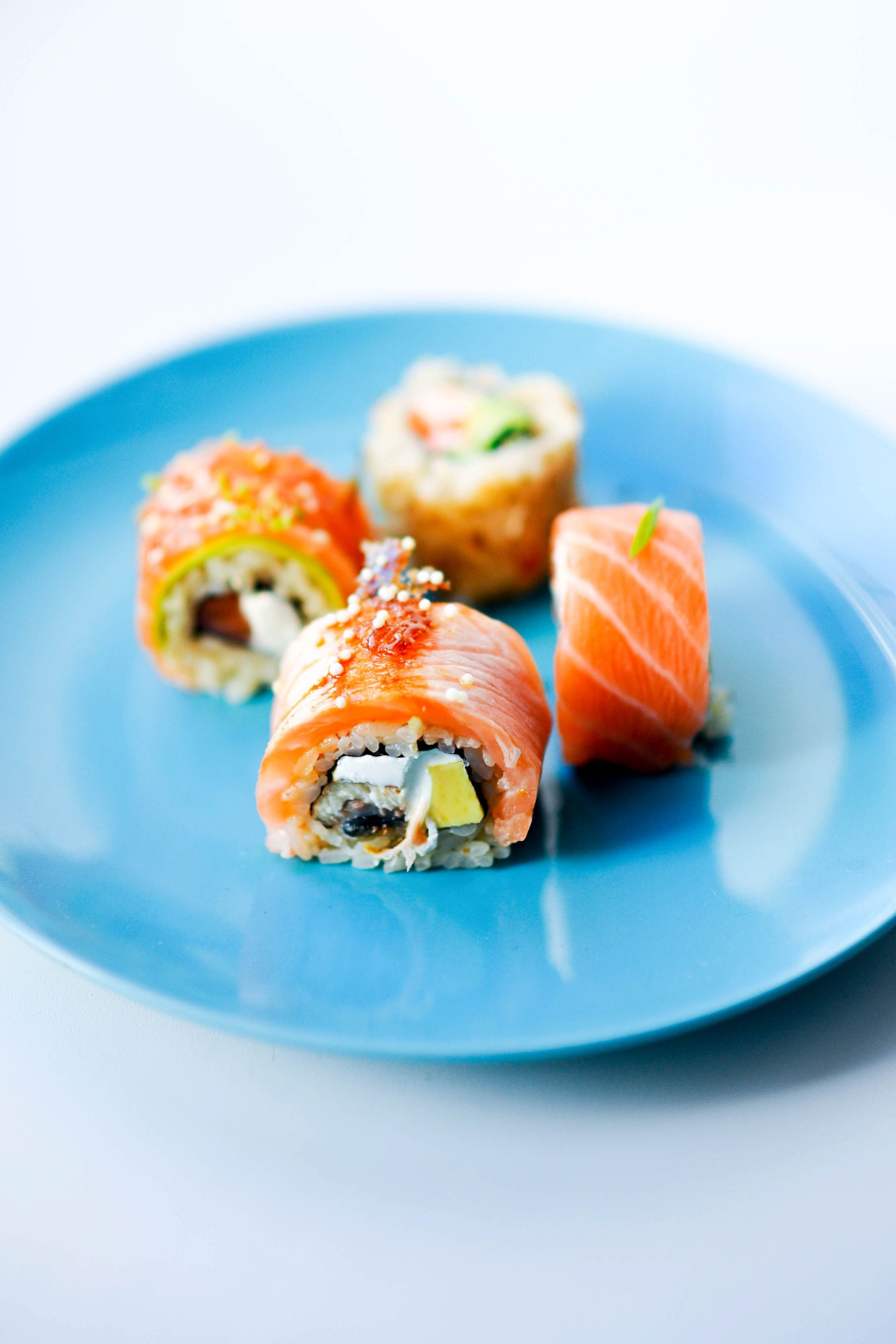
Homemade sushi rolls feature perfectly seasoned sushi rice, fresh sashimi‑grade salmon or tuna, creamy avocado, and crisp cucumber, all rolled up in nori seaweed. With a simple bamboo mat and a little practice, you’ll be rolling restaurant-quality sushi at home in about 1 hour, and it’s fresher and more affordable than takeout.
| Prep Time | 30 minutes |
|---|---|
| Cook Time | 20 minutes (plus 10 minutes resting) |
| Total Time | ~1 hour |
| Servings | 4 – 6 (makes 6–8 rolls) |
| Calories | ~380 per roll (approx. 6 pieces per roll) |
| Difficulty | Medium |
| Best Occasion | Date night, dinner parties, weekend cooking projects, when you’re craving sushi at home |
There’s a certain magic to sushi: the delicate balance of perfectly seasoned rice, fresh, silky fish, creamy avocado, and the satisfying snap of nori. It’s the kind of food that feels both simple and impossibly sophisticated. And while it might seem like something only a trained chef can pull off, I’m here to tell you: you can make incredible sushi at home.
I still remember my first attempt at homemade sushi. I was intimidated, convinced I’d end up with a sad, misshapen lump of rice and fish. But with a little patience, a bamboo mat, and some practice, something amazing happened – I rolled a beautiful, tight, picture‑perfect sushi roll. The sense of accomplishment was almost as good as the taste.
The secret to great sushi at home is all in the preparation. Perfectly seasoned sushi rice is the foundation – it needs to be sticky, glossy, and balanced with just the right amount of vinegar, sugar, and salt[reference:0]. Fresh, high‑quality fish is essential – look for sushi‑grade or sashimi‑grade salmon, tuna, or yellowtail from a trusted fishmonger[reference:1]. And the rolling technique? It’s easier than you think, especially with a bamboo mat and a little practice[reference:2].
This recipe will walk you through every step – from cooking and seasoning the rice, to slicing the fish, to rolling and slicing beautiful, restaurant‑quality maki rolls. Whether you’re making a classic salmon avocado roll, a spicy tuna roll, or a colorful rainbow roll, this guide has you covered.
Let’s roll.
What Are Sushi Rolls?
Sushi rolls, or makizushi, are a type of sushi where vinegared rice and various fillings are rolled up in a sheet of nori (dried seaweed)[reference:3]. The rolls are then sliced into bite‑sized pieces and served with soy sauce, wasabi, and pickled ginger. There are several styles of sushi rolls, including:
- Maki: The classic roll with nori on the outside and rice inside.
- Uramaki (inside‑out roll): Rice is on the outside, with nori and fillings inside.
- Temaki (hand roll): A cone‑shaped roll, eaten with your hands.
Sushi originated in Japan, where it has been enjoyed for centuries. The combination of vinegared rice and fresh fish is both simple and profound – a testament to the beauty of high‑quality ingredients prepared with care.
Flavor & Texture Profile
- Flavor: Bright, fresh, and balanced – the tangy, slightly sweet sushi rice complements the rich, buttery fish, creamy avocado, and crisp vegetables. The nori adds a subtle, savory ocean flavor
- Texture: Tender, slightly chewy rice; silky, melt‑in‑your‑mouth fish; creamy avocado; crisp cucumber; and a satisfying snap from the nori
- Why people love it: It’s the ultimate interactive meal – fresh, healthy, and endlessly customizable. The combination of textures and flavors is both delicate and deeply satisfying
Why You’ll Love This Recipe
- Restaurant‑quality at home – Fresher and more affordable than takeout
- Perfectly seasoned sushi rice – The foundation of great sushi, made with the ideal vinegar‑sugar‑salt balance[reference:4]
- Fresh, high‑quality fish – Use sushi‑grade salmon, tuna, or yellowtail for authentic flavor[reference:5]
- Creamy avocado and crisp vegetables – The perfect texture companions
- Customizable – Use your favorite fillings – from raw fish to cooked shrimp to vegetables
- Fun and interactive – Perfect for date night or a cooking party with friends
- Healthy and satisfying – Packed with protein, healthy fats, and fresh ingredients
- Beautiful presentation – A platter of colorful sushi rolls is a stunning centerpiece
- No special equipment required – A bamboo mat is all you need (and even that is optional)
- Leftovers are great – Sushi keeps well for a day and makes a perfect next‑day lunch
Ingredients
For the Sushi Rice
| Ingredient | Amount | Notes |
|---|---|---|
| Japanese short‑grain sushi rice | 2 cups (about 400g) | Do not substitute with long‑grain rice |
| Water | 2¼ cups | For cooking the rice |
| Kombu (dried kelp) – optional | 1 small piece (about 2 inches) | Adds umami to the rice[reference:6] |
| Rice vinegar (unseasoned) | ¼ cup (60 ml) | Seasoned rice vinegar can be used, but adjust sugar/salt accordingly[reference:7] |
| Granulated sugar | 4 teaspoons (16g) | Adjust to taste[reference:8] |
| Kosher salt | 1 teaspoon (6g) | Fine sea salt also works[reference:9] |
For the Fillings
| Ingredient | Amount | Notes |
|---|---|---|
| Sushi‑grade salmon or tuna | 8 – 10 oz (about 225 – 280g) | Look for “sushi‑grade” or “sashimi‑grade” from a trusted source[reference:10] |
| Ripe avocado | 2 | Firm but slightly soft to the touch |
| English cucumber | ½ | Thinly sliced into matchsticks |
| Nori sheets | 6 – 8 | Roasted seaweed sheets |
For Serving
- Soy sauce (for dipping)
- Wasabi paste (optional)
- Pickled ginger (gari)
- Toasted sesame seeds (optional, for garnish)
Ingredient Notes
The Rice: Japanese short‑grain rice is essential – it has the right starch content to become sticky and cohesive. Do not substitute with long‑grain or jasmine rice. Rinse the rice thoroughly until the water runs clear to remove excess starch[reference:11].
The Fish: Always use sushi‑grade or sashimi‑grade fish from a trusted fishmonger[reference:12]. Farmed salmon from a reputable source is a good choice[reference:13]. Tuna should be a deep red color and smell fresh[reference:14]. If you’re unsure about raw fish, use cooked shrimp, crab stick (surimi), or grilled vegetables.
The Avocado: Choose avocados that are ripe but still firm – they should yield slightly to gentle pressure. Slice them just before assembling to prevent browning.
The Nori: Nori sheets should be crisp and dry. If they’ve gone soft, toast them briefly over a gas flame or in a dry pan for a few seconds.
Ingredient Substitutions
| Dietary Need | Substitution |
|---|---|
| Gluten‑Free | Use gluten‑free soy sauce (tamari); ensure all other ingredients are GF |
| Vegan / Vegetarian | Use grilled vegetables (bell pepper, sweet potato, asparagus), tofu, or avocado only; omit fish |
| Dairy‑Free | This recipe is naturally dairy‑free – enjoy! |
| Low‑Carb / Keto | Use cauliflower rice instead of sushi rice (though the texture will be different) |
| No Raw Fish | Use cooked shrimp, crab stick, smoked salmon, or grilled vegetables |
Equipment
Essential Tools:
- Bamboo sushi rolling mat (makisu) – or a tea towel as a substitute[reference:15]
- Large pot or rice cooker
- Large wooden or plastic bowl (for seasoning rice – avoid metal, which can react with the vinegar)
- Rice paddle or wooden spoon
- Sharp chef’s knife
- Cutting board
- Small bowl of water (for wetting your hands and knife)
- Plastic wrap (optional, for covering the bamboo mat)
Nice‑to‑Have: A fan or a piece of cardboard (for cooling and drying the rice), a sushi knife (yanagiba) for clean slicing.
Step‑by‑Step Instructions
Step 1: Cook the Sushi Rice
Rinse 2 cups of sushi rice in a fine‑mesh strainer under cold running water, stirring gently with your fingers, until the water runs clear. Drain well. In a large pot, combine the rinsed rice with 2¼ cups of water. If using kombu, add it now. Bring to a boil over medium heat, then reduce the heat to low, cover, and simmer for 15 minutes. Remove from heat and let it rest, covered, for 10 minutes[reference:16].
Step 2: Make the Sushi Vinegar Seasoning
While the rice is resting, combine the rice vinegar, sugar, and salt in a small saucepan. Heat over low heat, stirring, until the sugar and salt are completely dissolved – do not let it boil[reference:17]. Remove from heat and set aside.
Step 3: Season the Rice
Transfer the cooked rice to a large, wide wooden or plastic bowl. Gently fold in the vinegar mixture using a rice paddle or wooden spoon, using a cutting motion to avoid mashing the rice[reference:18]. Use a fan or a piece of cardboard to fan the rice while you mix – this cools it and gives it a beautiful, glossy sheen[reference:19]. The rice should be just above room temperature when you’re ready to roll.
Aroma Cue: The sweet, tangy scent of vinegar and rice will fill your kitchen – this is the smell of sushi.
Step 4: Prep the Fillings
Slice the fish against the grain into long, thin strips (about ½‑inch wide). Slice the avocado into thin wedges. Cut the cucumber into thin matchsticks[reference:20].
Visual Cue: The fish should be sliced cleanly, with a smooth, even texture. The avocado should be creamy and bright green.
Step 5: Set Up Your Rolling Station
Place the bamboo mat on a clean work surface, with the bamboo slats running horizontally. If desired, cover the mat with plastic wrap for easy cleanup. Fill a small bowl with water (for wetting your hands) and have your nori, rice, and fillings ready.
Step 6: Assemble the Roll
Place a sheet of nori on the bamboo mat, shiny side down and rough side up[reference:21]. Wet your hands with water to prevent the rice from sticking. Spread about ¾ cup of sushi rice evenly over the nori, leaving a 1‑inch border at the top and a ½‑inch border at the bottom[reference:22].
Step 7: Add the Fillings
Arrange your fillings in a line across the center of the rice – about 1–2 strips of fish, a few slices of avocado, and some cucumber matchsticks[reference:23].
Step 8: Roll It Up
Using the bamboo mat, lift the edge closest to you and roll it over the fillings, tucking them in tightly. Continue rolling, lifting the mat away as you go, until the roll is complete. Press gently to seal the edge[reference:24].
Step 9: Slice and Serve
Using a sharp, wet knife, slice the roll into 6–8 even pieces. Clean the knife between slices for clean cuts. Arrange the sushi on a platter and serve immediately with soy sauce, wasabi, and pickled ginger.
Expert Chef Tips
- Use the right rice: Short‑grain Japanese rice is essential – it’s sticky and cohesive, perfect for sushi[reference:25].
- Season the rice properly: The vinegar‑sugar‑salt ratio is key – ¼ cup vinegar, 4 teaspoons sugar, 1 teaspoon salt for 2 cups of rice is a great starting point[reference:26].
- Keep your hands wet: Wet your hands before touching the rice – it prevents sticking and makes spreading the rice much easier.
- Don’t overfill: Too many fillings will make the roll hard to seal and slice. Keep it to 2–3 ingredients per roll.
- Use a sharp knife: A sharp, wet knife is essential for clean, even slices – a dull knife will crush the roll[reference:27].
- Toast the nori: If your nori is soft, toast it briefly over a gas flame or in a dry pan – it will become crisp and flavorful.
- Make it your own: Don’t be afraid to experiment with fillings – from spicy tuna to tempura shrimp to pickled vegetables, the possibilities are endless.
Troubleshooting
| Problem | Cause | Solution |
|---|---|---|
| Rice is too sticky or mushy | Too much water or over‑rinsed | Use the correct rice‑to‑water ratio (1:1.1) and rinse gently until water runs clear |
| Rice is too dry or hard | Not enough water or under‑cooked | Add a little more water and cook for a few more minutes; let it rest covered |
| Roll falls apart when slicing | Too much filling or not rolled tightly enough | Use less filling and roll more firmly; let the roll rest for a minute before slicing |
| Nori is chewy instead of crisp | Nori absorbed moisture from the rice | Assemble rolls quickly and serve immediately; toast nori before using |
| Fish isn’t fresh | Bought fish that wasn’t sushi‑grade | Always buy from a trusted fishmonger and look for “sushi‑grade” or “sashimi‑grade” labels[reference:28] |
| Avocado is brown | Exposed to air too long | Slice avocado just before assembling and squeeze a little lime juice on it |
Recipe Variations
- Spicy Tuna Roll: Mix chopped tuna with sriracha and a little mayonnaise for a spicy kick[reference:29].
- California Roll: Use imitation crab (surimi), avocado, and cucumber – it’s a classic for a reason[reference:30].
- Rainbow Roll: Top an inside‑out roll with thin slices of tuna, salmon, yellowtail, and avocado for a colorful, impressive presentation[reference:31].
- Vegetarian Roll: Fill with avocado, cucumber, bell pepper, and pickled vegetables – fresh and delicious.
- Tempura Roll: Add crispy tempura shrimp or vegetables for a satisfying crunch.
- Philadelphia Roll: Add cream cheese and smoked salmon for a rich, creamy twist.
- Hand Rolls (Temaki): Make cone‑shaped rolls with a half‑sheet of nori – they’re fun to eat and even easier to make[reference:32].
Serving Suggestions
Classic pairings: Serve your sushi rolls with soy sauce for dipping, a dab of wasabi, and pickled ginger (gari) to cleanse the palate between bites.
Side dishes: Miso soup, edamame, or a simple seaweed salad make perfect accompaniments.
Drink pairings: A crisp sake, a cold Japanese beer (like Asahi or Sapporo), or a glass of dry white wine. For non‑alcoholic, try green tea or sparkling water with a twist of lime.
Presentation idea: Arrange the sushi slices on a wooden board or a slate platter. Garnish with sesame seeds, microgreens, or edible flowers for a beautiful, restaurant‑worthy presentation.
Storage & Reheating
Refrigeration: Sushi is best enjoyed fresh, but leftovers can be stored in an airtight container in the refrigerator for up to 1 day. The rice will firm up, and the nori may become soft – it’s still delicious, but the texture will change.
Freezing: Sushi does not freeze well – the rice becomes grainy and the fish loses its texture.
Reheating: Sushi is typically served cold or at room temperature. If you must reheat, a brief 15‑second blast in the microwave can take the chill off, but it’s not recommended.
Make‑Ahead Tip: The sushi rice can be made up to a few hours ahead and kept covered at room temperature. The fish and vegetables should be prepped just before assembling.
Frequently Asked Questions
What is sushi‑grade fish?
Sushi‑grade (or sashimi‑grade) fish is a term that indicates the fish is safe to eat raw. It’s typically frozen to kill parasites and handled with extreme care[reference:33]. Always buy from a trusted fishmonger and look for these labels.
Can I use any type of rice for sushi?
No – you must use Japanese short‑grain rice. It has the right starch content to become sticky and cohesive. Long‑grain or jasmine rice will not work[reference:34].
What is the ratio for sushi rice seasoning?
A classic ratio is ¼ cup rice vinegar, 4 teaspoons sugar, and 1 teaspoon salt for 2 cups of uncooked rice[reference:35]. Adjust to your taste.
Can I make sushi without a bamboo mat?
Yes – you can use a clean tea towel or plastic wrap to roll the sushi. The bamboo mat makes it easier, but it’s not essential[reference:36].
How do I keep the rice from sticking to my hands?
Keep a small bowl of water nearby and wet your hands before touching the rice – this prevents sticking and makes it much easier to work with.
Can I make sushi rolls ahead of time?
Sushi is best enjoyed fresh, but you can make it up to a few hours ahead and store it in the refrigerator, covered with a damp cloth. The nori may become soft, but it will still taste good.
What fish is safe for sushi at home?
Farm‑raised salmon and tuna are popular choices[reference:37]. Yellowtail, sea bass, and scallops are also good. Always buy from a trusted source and look for “sushi‑grade” labels[reference:38].
How do I get clean, even slices?
Use a sharp, wet knife and wipe it clean between each slice. A single, smooth motion will give you clean, even pieces.
Can I make vegan sushi?
Absolutely – use avocado, cucumber, bell pepper, pickled vegetables, and tofu. It’s fresh, delicious, and completely plant‑based.
How many calories are in a sushi roll?
This recipe has approximately 380 calories per roll (about 6 pieces). The exact count depends on the fillings and amount of rice used.
Nutrition
Nutrition values are estimates and may vary based on specific ingredients and portion sizes.
| Nutrient | Per Roll (approx. 6 pieces) |
|---|---|
| Calories | ~380 |
| Protein | 22g |
| Carbohydrates | 42g |
| Fat | 14g |
| Saturated Fat | 2g |
| Fiber | 5g |
| Sugar | 4g |
| Sodium | ~580mg |
Recipe Card
Recipe Name: Homemade Sushi Rolls Bursting with Fresh Fish and Creamy Avocado
Cuisine: Japanese
Course: Main Course / Appetizer
Prep Time: 30 minutes
Cook Time: 20 minutes (plus 10 minutes resting)
Total Time: ~1 hour
Servings: 4 – 6 (makes 6–8 rolls)
Calories: ~380 per roll
Author: [KITCHENFLORA]
Ingredients – Sushi Rice
- 2 cups Japanese short‑grain sushi rice
- 2¼ cups water
- 1 small piece kombu (dried kelp) – optional
- ¼ cup rice vinegar (unseasoned)
- 4 teaspoons granulated sugar
- 1 teaspoon kosher salt
Ingredients – Fillings and Serving
- 8 – 10 oz sushi‑grade salmon or tuna, sliced into strips
- 2 ripe avocados, sliced into wedges
- ½ English cucumber, cut into matchsticks
- 6 – 8 nori sheets
- Soy sauce, wasabi, and pickled ginger (for serving)
Instructions
- Cook rice: Rinse rice until water runs clear. Cook with 2¼ cups water in a pot or rice cooker. Let rest for 10 minutes after cooking.
- Season rice: Heat vinegar, sugar, and salt until dissolved. Fold into cooked rice using a cutting motion. Fan to cool.
- Prep fillings: Slice fish, avocado, and cucumber into strips.
- Set up: Place a bamboo mat on your work surface. Wet your hands.
- Assemble: Place nori on the mat, shiny side down. Spread ¾ cup of rice evenly over the nori, leaving a border at the top.
- Add fillings: Place fish, avocado, and cucumber in a line across the center.
- Roll: Using the mat, roll tightly from the edge closest to you. Press to seal.
- Slice: Using a sharp, wet knife, slice the roll into 6–8 pieces. Clean the knife between slices.
- Serve: Arrange on a platter and serve with soy sauce, wasabi, and pickled ginger.
Notes
- Always use sushi‑grade or sashimi‑grade fish from a trusted source[reference:39].
- Keep your hands wet when handling rice to prevent sticking.
- Use a sharp, wet knife for clean, even slices.
- Customize your rolls with your favorite fillings – from spicy tuna to tempura shrimp.
- Sushi is best enjoyed fresh – make it just before serving.
Nutrition (per roll, approximate)
Calories: 380 | Protein: 22g | Carbs: 42g | Fat: 14g | Fiber: 5g | Sugar: 4g | Sodium: 580mg
Making sushi at home is one of the most rewarding cooking experiences I know. It’s a little bit of art, a little bit of science, and a whole lot of deliciousness. The first time you roll a perfect, tight, beautiful sushi roll, you’ll feel like a true chef. I hope this recipe gives you the confidence to experiment, to play, and to create something truly special. Whether you’re making it for a date night, a dinner party, or just because you’re craving sushi, these rolls are sure to impress. Now go roll something amazing!