
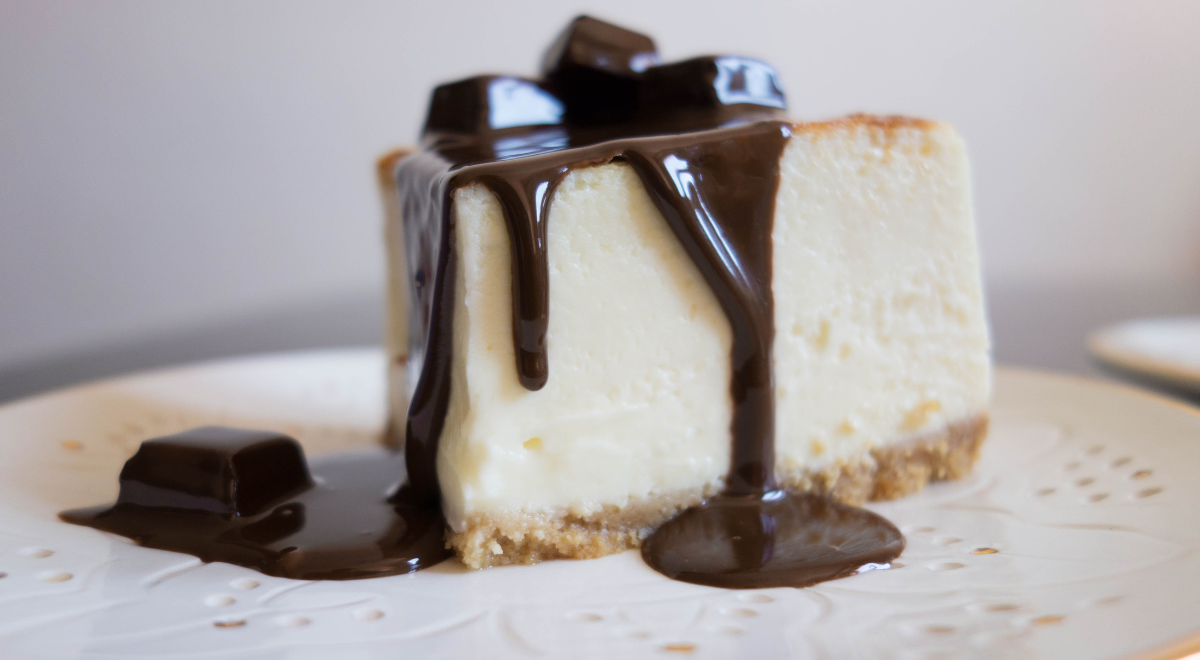
Quick answer: A classic New York cheesecake is dense, creamy, and tangy, made with cream cheese, sugar, eggs, and a graham cracker crust, baked low and slow then cooled gradually to prevent cracks. The secret? Room‑temperature ingredients and a water bath.
Recipe at a glance
- Prep time: 30 minutes
- Cook time: 1 hour 10 minutes
- Cooling + chilling: 6+ hours (overnight best)
- Total time: ~7.5 hours
- Calories (per slice): ~480
- Difficulty: Medium (patience required)
- Best occasion: Birthdays, holidays, dinner parties, or when you need to impress someone without saying a word
Introduction
The first time I made a New York cheesecake, I cried.
Not because it cracked – though it did, right down the middle like the Grand Canyon. I cried because I’d spent $15 on cream cheese, four hours of my Sunday, and all I got was a sad, cratered disc that tasted fine but looked like a disaster.
That was twelve years ago.
Since then, I’ve made cheesecake over 200 times. I’ve cracked them, sunk them, overbaked them into rubber, and underbaked them into soup. I’ve learned that a truly great New York cheesecake isn’t just a recipe – it’s a ritual.
This is the one I now make for every birthday, every holiday, and every time someone says, “You have to try this restaurant’s cheesecake.” (Mine is better. I’m not sorry.)
It’s dense but silky. Rich but balanced. And yes – it’s crack‑free. Let me show you exactly how.
What is New York cheesecake?

New York cheesecake is a style of cheesecake known for its dense, creamy, and rich texture, thanks to a higher ratio of cream cheese and the addition of heavy cream or sour cream. Unlike fluffy Japanese or no‑bake versions, a true NY cheesecake is baked low and slow, develops a slightly golden top, and has a signature tang from sour cream or lemon.
Origin: Popularized in the 1900s by Jewish delis in New York City – most famously Lindy’s and Junior’s. It became an American icon.
Flavor profile: Sweet, tangy, buttery vanilla with a smooth, almost custard‑like richness.
Texture profile: Dense but silky – not airy, not heavy. It should melt on your tongue.
Why people love it: It feels luxurious, it’s endlessly adaptable, and one slice is pure comfort.
Why you’ll love this recipe
- Crack‑free guarantee – my water bath + slow cooling method works every time
- Ultra creamy – no grainy, dry, or rubbery texture
- Real New York style – tangy, rich, and authentic
- Make‑ahead friendly – actually tastes better after 24 hours in the fridge
- No fancy equipment – just a springform pan and a roasting pan
- Impress everyone – looks like a bakery masterpiece
- Freezes beautifully – portion it out for emergencies
Ingredients
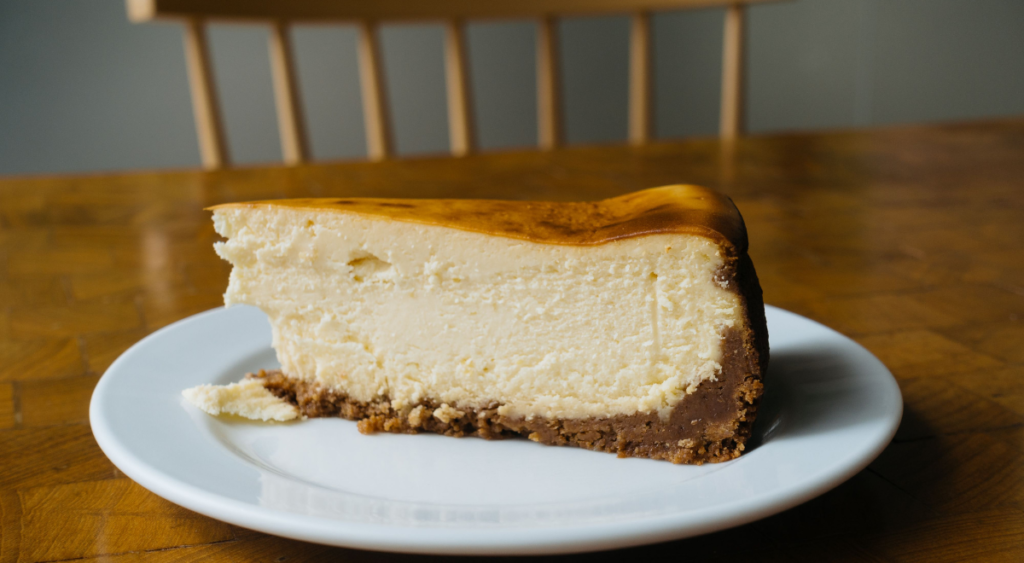
For the crust
- Graham cracker crumbs – 1 ½ cups (180g) (about 12 full sheets)
- Granulated sugar – 2 tablespoons (25g)
- Unsalted butter, melted – 5 tablespoons (70g)
- Salt – ⅛ teaspoon
Chef note: Pulse whole graham crackers in a food processor – don’t buy pre‑crushed (too fine).
For the filling
- Full‑fat cream cheese – 32 oz (904g) four 8‑oz blocks, softened to room temperature
Do not use low‑fat or whipped. - Granulated sugar – 1 ¼ cups (250g)
- Sour cream (full fat) – ½ cup (120g) – adds tang + creaminess
- Heavy cream – ¼ cup (60ml)
- Vanilla extract – 1 tablespoon (15ml) – pure, not imitation
- Large eggs – 3, room temperature
- Egg yolk – 1 extra yolk (adds richness)
- Lemon zest – 1 teaspoon (optional but brightens flavor)
- Salt – ¼ teaspoon
Recommended brands (for best results)
- Cream cheese: Philadelphia (full fat) – trust me on this
- Sour cream: Daisy or full‑fat generic
- Graham crackers: Nabisco original or Keebler
Ingredient substitutions
| Diet / Need | Substitution |
|---|---|
| Gluten‑free crust | Use gluten‑free graham crackers or crushed gluten‑free ginger snaps |
| Dairy‑free filling | Not recommended for classic NY style – would require specialty vegan cream cheese (Miyoko’s or Violife) + coconut cream |
| Lower fat | Use 1/3 less fat cream cheese + Greek yogurt instead of sour cream – texture will be less rich |
| No sour cream | Replace with full‑fat Greek yogurt (same amount) |
| No heavy cream | Use full‑fat coconut cream or additional sour cream |
| Egg‑free | Not possible for authentic NY cheesecake – try a baked vegan cheesecake recipe instead |
Chef warning: This recipe is not designed for drastic substitutions. Change the dairy ratios and you change the texture
Equipment
Essential:
- 9‑inch springform pan (non‑leaky preferred)
- Electric mixer (stand mixer with paddle attachment ideal, hand mixer works)
- Large roasting pan (for water bath – must fit springform)
- Heavy‑duty aluminum foil (to wrap pan – 3 layers)
- Rubber spatula
- Instant‑read thermometer (optional but helpful)
- Wire cooling rack
- Large bowl (for water bath hot water)
Optional / helpful:
- Food processor (for crust)
- Kitchen torch (for smoothing top)
- Offset spatula (for slicing cleanly)
- Parchment paper circles (for pan bottom)
Budget alternatives: No springform? Use a 9‑inch cake pan lined with parchment and serve directly from pan (harder to unmold).
Step‑by‑step instructions
Part 1 – Crust (10 minutes)
Step 1 – Prep the pan
Cut a round of parchment paper for the bottom of your springform pan. Lightly grease the sides with butter. Wrap the outside of the pan with 3 layers of heavy‑duty foil, bringing it all the way up the sides. Why: Prevents water from the water bath leaking in.
Step 2 – Make crust
In a medium bowl, combine graham cracker crumbs, sugar, and salt. Pour in melted butter. Stir with a fork until it looks like wet sand. Visual cue: Squeeze a handful – it should hold together.
Step 3 – Press crust
Dump crumbs into prepared pan. Use the bottom of a measuring cup or a glass to press firmly and evenly into the bottom and about 1 inch up the sides. Texture cue: Compact, no loose crumbs.
Step 4 – Par‑bake crust (optional but recommended)
Bake at 350°F (175°C) for 8 minutes. Let cool while you make filling. This prevents a soggy bottom.
Part 2 – Filling (15 minutes)
Step 5 – Bring ingredients to room temperature
Crucial. Set out cream cheese, eggs, sour cream, and heavy cream 2 hours before starting. Why: Cold ingredients = lumpy cheesecake.
Step 6 – Beat cream cheese
In a stand mixer with paddle attachment, beat cream cheese on medium speed until completely smooth and fluffy – about 2 minutes. Visual cue: No lumps, looks like frosting. Scrape down bowl (including bottom) twice.
Step 7 – Add sugar
With mixer on medium, slowly add sugar. Beat for another 2 minutes, scraping down as needed.
Step 8 – Add sour cream, heavy cream, vanilla, salt, and zest
Mix on low until just combined. Do not overmix – overmixing incorporates too much air (leads to cracks).
Step 9 – Add eggs, one at a time
Crack eggs into a small bowl first (to avoid shells). Add one egg, mix on low just until yolk disappears. Repeat with second egg, third egg, then the extra yolk. Pro tip: Never mix on high – low speed prevents air bubbles.
Step 10 – Final scrape
Remove bowl from mixer. Use a spatula to fold the bottom and sides gently. Batter should be silky, pourable, and uniform.
Part 3 – Assemble & bake
Step 11 – Pour filling
Pour batter into the cooled crust. Smooth the top with an offset spatula. Tap the pan gently on the counter 10 times to release air bubbles.
Step 12 – Prepare water bath
Place the foil‑wrapped springform pan inside a large roasting pan. Put the roasting pan on the middle oven rack. Carefully pour hot tap water (not boiling) into the roasting pan until it reaches halfway up the sides of the springform. Tip: Pour after pan is in the oven to avoid sloshing.
Step 13 – Bake low and slow
Bake at 325°F (160°C) for 60–75 minutes. Visual cues: Edges should be set (lightly puffed), but the center 2‑3 inches will still jiggle like Jell‑O when you gently shake the pan. Temperature cue (optional): Internal temp 150°F (65°C).
Step 14 – Cool in oven (crack‑free secret)
Turn off the oven. Prop the oven door open about 6 inches with a wooden spoon. Let cheesecake cool inside the water bath for 1 full hour.
Step 15 – Finish cooling
Remove pan from water bath. Remove foil. Run a thin knife around the edge to release any sticking. Cool completely on a wire rack (about 2 hours). Then refrigerate, uncovered, for at least 4 hours – overnight is best.
Step 16 – Serve
Release springform ring. Slice with a hot, dry knife (dip in hot water, wipe clean between slices). Serve cold or at room temperature (30 minutes out of fridge).
Expert chef tips
Don’t open the oven during baking.
Temperature fluctuations cause cracks. Trust the timing.
Room temperature is non‑negotiable.
Cold cream cheese = lumps. Cold eggs = broken emulsion. Set everything out 2 hours before.
Water bath prevents cracks and keeps texture silky.
The steam provides gentle, even heat. If you skip it, you risk a cracked, dry cheesecake.
Overmixing incorporates air – air = cracks.
Mix on low just until combined. A few small lumps are better than overmixed.
Cool slowly – no sudden temperature changes.
The oven‑off‑with‑door‑open step is what separates pros from panicked bakers.
Use a thermometer for doneness.
At 150°F (65°C) center, the cheesecake is perfectly set – not under, not over.
Wrap foil tightly.
Even pinhole leaks let water ruin your crust. Use wide, heavy‑duty foil and triple‑wrap.
Troubleshooting
| Problem | Why? | Fix |
|---|---|---|
| Large crack on top | Overbaked or sudden temp change | Next time, pull at 150°F internal; cool slower. Serve with fruit topping to hide. |
| Soggy crust | Water bath leaked | Wrap foil higher and tighter. Or par‑bake crust 10 minutes. |
| Dense / rubbery texture | Overmixed batter or overbaked | Mix on low just until combined. Check doneness earlier. |
| Creamy but runny center | Underbaked | Bake 10‑15 minutes longer. Next time, use thermometer (150°F). |
| Lumpy filling | Cream cheese wasn’t room temp | Strain batter through a fine‑mesh sieve before baking. |
| Burnt top | Oven too hot or rack too high | Use middle rack; verify oven temp with a separate thermometer. |
| Cheesecake stuck to pan | Sides not greased | Run a warm knife around edge before releasing springform. |
Recipe variations
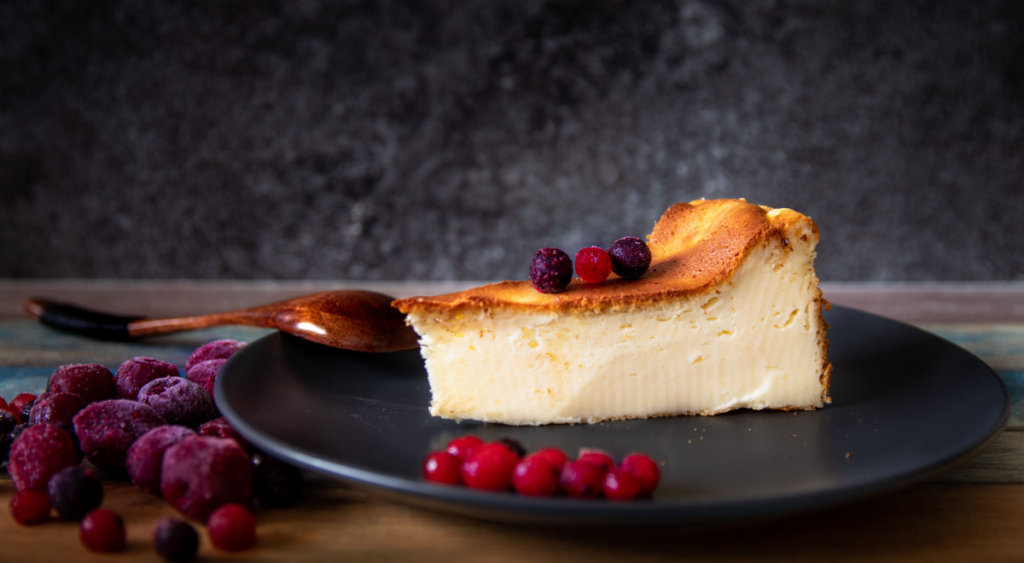
Classic (as written) – the gold standard.
Lemon blueberry swirl
Add 2 tbsp lemon juice + zest to batter. Purée ½ cup blueberries with 1 tbsp sugar, swirl into batter before baking.
Chocolate marble
Melt 4 oz dark chocolate + 2 tbsp heavy cream. Drop spoonfuls over batter and swirl with a knife.
Pumpkin spice (fall)
Reduce sugar to 1 cup. Add ¾ cup pumpkin purée + 1 tsp cinnamon + ½ tsp nutmeg. Bake as directed.
Low‑carb / keto crust
Use almond flour + butter + sweetener crust. Replace sugar with allulose or monk fruit. Texture will differ.
Mini cheesecakes
Line a muffin tin with liners. Press crust into each (1 tbsp). Fill with batter. Bake at 325°F for 18‑22 minutes. No water bath needed.
Viral “Crumbl” copycat
Top cooled cheesecake with a layer of cookie dough crumbles + drizzle of caramel.
Serving suggestions
Toppings:
- Fresh berries + mint
- Cherry pie filling (classic)
- Salted caramel sauce
- Lemon curd
- Chocolate ganache
- Whipped cream rosettes
Drinks:
- Espresso or cappuccino
- Dessert wine (Moscato, Vin Santo)
- Cold glass of milk
- Hot tea (Earl Grey)
Presentation:
- Slice with hot knife, wipe between slices for clean edges
- Dust with powdered sugar through a stencil
- Serve on chilled plates
Holiday:
Christmas: cranberry topping + rosemary sprig
Thanksgiving: pumpkin cheesecake variation + candied pecans
Birthday: candle + chocolate shavings
Storage & reheating
Refrigeration:
Store in the springform pan (covered with plastic wrap) or an airtight container for up to 5 days. Flavor improves day 2‑3.
Freezing (whole):
Wrap well in plastic wrap, then foil. Freeze up to 3 months. Thaw overnight in fridge.
Freezing (slices):
Wrap individual slices in plastic wrap + foil. Freeze on a baking sheet first, then bag. Grab one slice at a time.
Reheating:
Cheesecake is served cold or room temp. To bring to room temp, leave on counter 30 minutes. Never microwave – it ruins texture.
Meal prep tip:
Make crust and freeze it (already pressed in pan). Bake later.
FAQ – People also ask
Why did my New York cheesecake crack?
Most common causes: overbaking, rapid temperature change, or overmixing the batter. Use a water bath, cool slowly in the oven, and mix on low.
Can I make this cheesecake without a water bath?
Yes, but the texture will be denser and you’re more likely to get cracks. Place a pan of water on the rack below instead.
How do I know when cheesecake is done?
Jiggle test: edges set, center wobbles like Jell‑O. Or internal temp 150°F (65°C). A toothpick should not come out clean – it should be moist.
Why is my cheesecake runny in the middle?
Underbaked. Bake 10‑15 minutes longer, then cool slowly. Also, chilling at least 6 hours is mandatory.
Can I use low‑fat cream cheese?
You can, but the texture will be less creamy and more prone to cracking. For best results, use full‑fat.
How long should I chill cheesecake?
Minimum 4 hours. Overnight (8‑12 hours) is ideal for clean slicing and best flavor.
Can I freeze cheesecake with topping?
Freeze without topping. Add fresh fruit or sauce after thawing.
What’s the best pan size for this recipe?
9‑inch springform. An 8‑inch will be thicker (bake 75‑85 min). A 10‑inch will be thinner (bake 45‑55 min).
Do I have to par‑bake the crust?
No, but it prevents sogginess. Worth the 8 minutes.
Can I double this recipe?
Bake in two 9‑inch pans (not one larger pan). Bake time similar.
How do I get clean cheesecake slices?
Use a thin knife, dip in hot water, wipe dry between each cut. Chill thoroughly first.
What’s the difference between New York and regular cheesecake?
NY cheesecake uses more cream cheese plus sour cream or heavy cream, making it denser and tangier. Regular cheesecake is often lighter.
Nutrition (estimated per slice, 12 slices)
- Calories: 480 kcal
- Protein: 8 g
- Carbohydrates: 35 g
- Fat: 34 g
- Fiber: <1 g
- Sugar: 28 g
- Sodium: 320 mg
Nutrition values are estimates and may vary based on specific ingredients and brands used.
Recipe Card (for WP Recipe Maker)
Recipe Name: Classic New York Cheesecake (Creamy & Rich)
Cuisine: American / Jewish‑American
Course: Dessert
Prep Time: 30 minutes
Cook Time: 1 hour 10 minutes
Total Time: 7+ hours (includes chilling)
Servings: 12
Calories: 480
Author: [Your Name]
Ingredients (Crust):
- 1 ½ cups (180g) graham cracker crumbs
- 2 tbsp (25g) sugar
- 5 tbsp (70g) unsalted butter, melted
- ⅛ tsp salt
Ingredients (Filling):
- 32 oz (904g) full‑fat cream cheese, room temp
- 1 ¼ cups (250g) sugar
- ½ cup (120g) full‑fat sour cream
- ¼ cup (60ml) heavy cream
- 1 tbsp (15ml) vanilla extract
- 3 large eggs + 1 yolk, room temp
- 1 tsp lemon zest (optional)
- ¼ tsp salt
Instructions:
- Preheat oven to 350°F (175°C). Wrap 9‑inch springform pan with 3 layers of heavy foil.
- Mix crust ingredients; press into bottom and 1” up sides. Bake 8 min. Cool. Reduce oven to 325°F (160°C).
- Beat cream cheese until smooth. Add sugar, then sour cream, heavy cream, vanilla, salt, zest.
- Add eggs one at a time on low speed, just until combined. Do not overmix.
- Pour filling into crust. Tap pan to release bubbles.
- Place pan in roasting pan; add hot water halfway up sides.
- Bake 60‑75 min until edges set but center jiggles.
- Turn off oven, prop door open, cool in water bath 1 hour.
- Remove from water bath, remove foil, cool completely on rack, then refrigerate 4+ hours (overnight best).
- Release springform, slice with hot knife, serve.
Notes:
- Room temperature ingredients are critical.
- Do not open oven while baking.
- For crack‑free results, cool slowly in oven.
Nutrition (per slice): 480 cal | 8g protein | 35g carbs | 34g fat
Now go make the creamiest, richest cheesecake of your life – and watch it disappear before you get a second slice.
Did this recipe save your dinner party? Leave a rating and tell me about your first (or fifth) cheesecake attempt below.